Manufacturing
How to Find a Manufacturer With AI (The Real Story, Including the Sample That Did Not Match)
Research can be accelerated. The final call still happens with a sample in your hand.
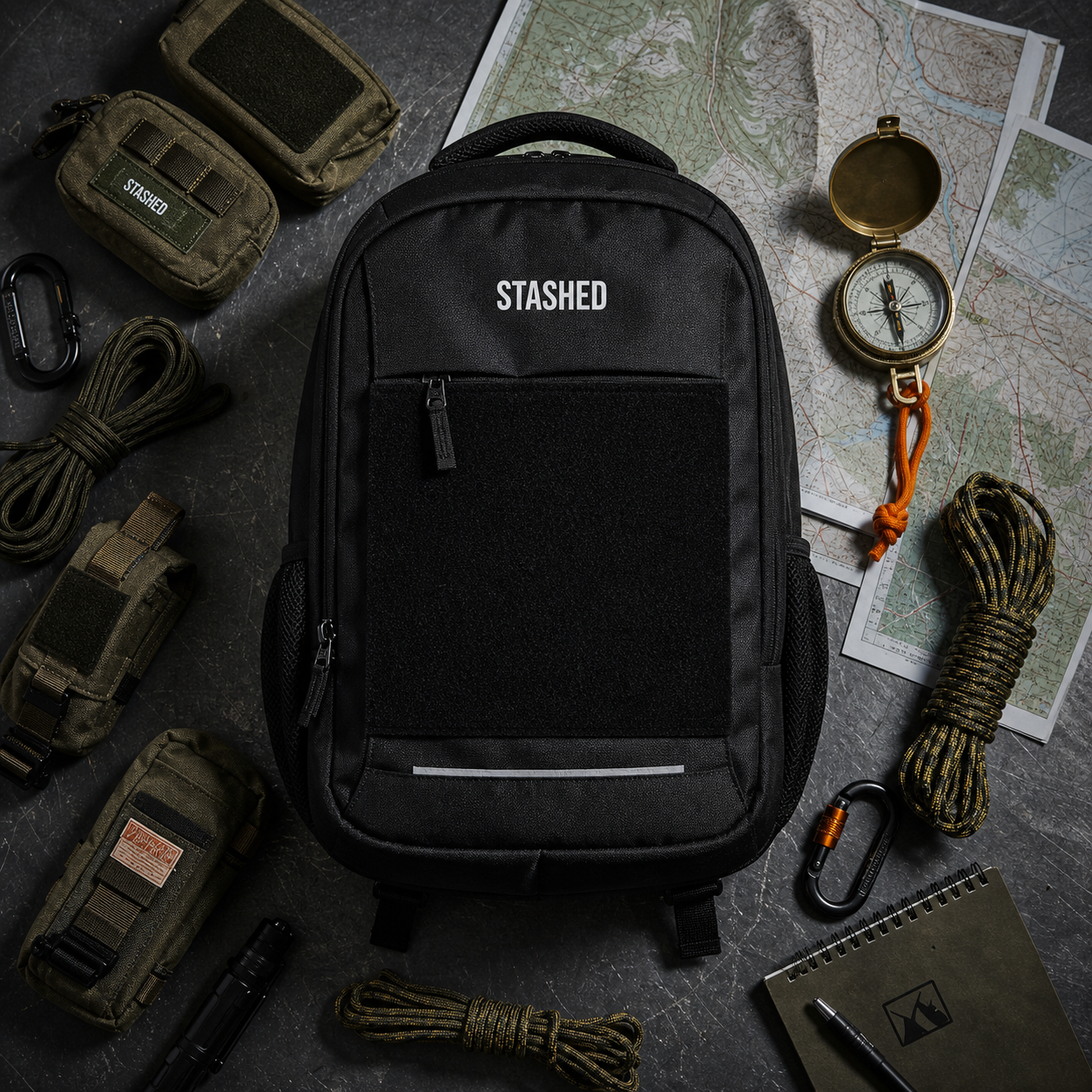
Most brand-building content focuses on the exciting parts. Naming. Branding. The launch. The first sale.
Nobody talks about the 47 WhatsApp messages it took to get a manufacturer to actually send you a sample. Or the sample that arrived looking nothing like what you described. Or the factory that seemed legitimate until you asked about their MOQ and suddenly got a different story.
Finding a manufacturer is not glamorous. It is mostly frustrating, occasionally sketchy, and genuinely hard to navigate without either existing industry contacts or a lot of time to spend making cold calls to places that may or may not call back.
We had one major advantage: our family runs SN Bags, a B2B bag manufacturing operation. We had years of ground-level knowledge about how this industry works, who the players are, and what red flags look like.
We still needed 8 weeks to lock in our manufacturing partner for Stashed. Here is how AI helped - and where it could not.
Why Finding a Manufacturer Is Harder Than Building the Product
For a physical product startup, the product concept is usually the easy part. The hard part is everything between the concept and a finished unit in a customer’s hands.
The core challenges with manufacturing sourcing in India:
Minimum Order Quantities (MOQs): Most mid-size manufacturers will not look at you seriously below 500-1000 units. For a new brand with no proven demand, committing to 500 units of inventory before you have validated anything is a significant financial and physical risk.
Trust: You are asking a factory you found on the internet to take your specifications, your deposit, and your design - and return finished goods. There is no contract that fully protects you if they cut corners or ghost you after the advance.
Quality consistency: Getting one good sample is the easy part. Getting the same quality at 300 units is the actual test, and you often do not find out you have failed it until the shipment arrives.
Communication gaps: Most Indian manufacturers - especially smaller ones - operate via WhatsApp, in a mix of Hindi, the local language, and broken English. Specs get lost. Nuances disappear. The spec sheet you sent as a PDF may never have been opened.
AI can help with research and initial outreach. It cannot replace the trust-building that comes from actually visiting a factory and meeting the people who will make your product.
We want to be clear about that upfront so you have the right expectations.
What AI Can and Cannot Do in Vendor Research
AI is good for:
- Generating a structured list of search queries to find manufacturers in specific clusters
- Drafting outreach messages and RFQs (Request for Quotation)
- Creating qualification frameworks - the right questions to ask
- Summarising responses from multiple vendors into a comparison
- Preparing negotiation language for MOQ, pricing, and payment terms
- Building tracking systems for your vendor pipeline
AI cannot:
- Verify that a manufacturer actually exists and is legitimate
- Assess the quality of their work from a description
- Build the relationship that makes a manufacturer prioritise your small order over a bigger client’s
- Replace the factory visit
- Negotiate for you in real time
- Tell you who to trust
The line is research and structure on one side, judgment and relationship on the other. AI handles the first half. You handle the second.
The Exact Claude Prompt Sequence We Used
We are sharing the actual sequence, not a cleaned-up version.
Prompt 1: Finding manufacturer clusters
“I am looking for bag manufacturers in India who can produce crossbody bags with custom fabric panels and Velcro attachment systems. What are the major bag manufacturing clusters in India? List them with the types of products each cluster typically specialises in, and suggest the best approach to find manufacturers in each cluster - trade directories, trade shows, or direct search.”
Claude gave us: Dharavi (Mumbai), Shivaji Nagar (Pune), sectors in Delhi/NCR, and some Kolkata clusters. It also flagged IndiaMart, TradeIndia, and relevant industry events.
Prompt 2: Generating the qualification criteria
“I am evaluating bag manufacturers for a D2C brand. Our product is a crossbody bag with a removable Velcro front panel, targeting urban youth, priced between Rs. 1,200-Rs. 2,000 retail. We need manufacturers who can handle: custom fabric selection, Velcro integration, custom zipper hardware, small initial MOQ (ideally 100-200 units for first order). Give me 10 qualification questions to ask manufacturers, and for each question, tell me what a good answer looks like versus a red flag answer.”
This was genuinely useful. We used 8 of the 10 questions verbatim in our manufacturer conversations.
Prompt 3: Writing the RFQ
“Write an RFQ (Request for Quotation) for a bag manufacturer. Product: crossbody bag, approximately 30cm x 20cm x 8cm, one main compartment, one front pocket, Velcro panel on front face (15cm x 20cm) that is removable and replaceable. Material: 600D polyester with PU coating for the main body. Hardware: matte black zippers, matte black metal D-rings. Required: 5 colour options for the main body, 10 design options for the Velcro panel. Initial order: 200 units. Please ask for: unit price at 200 units, 500 units, and 1000 units; sample cost; lead time; payment terms. Keep it professional but brief - we know manufacturers do not read long documents.”
The RFQ that came out of this got a far better response rate than our first manually written version. Manufacturers actually replied. We think it is because the AI-drafted version was clear, structured, and did not bury the important information in paragraphs.
How to Qualify Manufacturers: 10 Questions and Red Flags
These are the questions that actually matter:
-
What is your minimum order quantity for a new product? Good: “For new customers, we typically start at 200-500 pieces.” Red flag: “No minimum, we can do anything.”
-
Can I visit the facility before placing an order? Good: Any straightforward yes. Red flag: Deflection, excuses, or asking why.
-
Do you have existing clients I can contact for a reference? Good: Yes, here are two. Red flag: “We maintain client confidentiality” for every single reference.
-
What is your sample turnaround time and sample cost? Good: “7-14 working days, Rs. 500-Rs. 2,000 depending on complexity.” Red flag: Sample is “free” and takes 3 days - that usually means a modified existing product, not a custom sample.
-
How do you handle quality issues in a delivered batch? Good: A specific process - inspection, remake policy, credit note. Red flag: “We do not have defects” or vague reassurances.
-
What percentage of the order do you require as advance? Standard: 30-50% advance, remainder on delivery or before shipping. Red flag: 100% advance for a new relationship.
-
Do you handle your own fabric procurement or do we need to supply? No right answer - but you need to know, because it affects pricing and your control over quality.
-
What is your current production capacity per month? You want to understand if they are a 200-unit-per-month shop or a 50,000-unit operation. Both have their place, but a huge factory has no incentive to prioritise your small run.
-
Have you worked with Velcro/hook-and-loop attachment systems before? For our product specifically, this filtered out about half the manufacturers immediately.
-
What file format do you need for product specifications? Good: PDF, AI, DWG. Red flag: “Just WhatsApp me a photo.”
The SN Bags Advantage (And What It Means for You)
We will be honest: we had a head start that most people do not.
Our family’s SN Bags business gave us fluency in B2B manufacturing language. We knew what MOQs meant before we looked them up. We had a sense of what a reasonable sample cost was. We knew which questions to ask because we had heard the wrong answers before, watching from the sidelines of supplier conversations.
If you do not have this background, you need to build it. The fastest way:
- Spend two weeks reading every forum, blog, and Reddit thread about working with Indian manufacturers.
- Find one person in your target manufacturing industry and buy them coffee, physically or via a paid consultation.
- Order from 3-5 manufacturers before committing to one. Small sample orders. Yes, it costs more per unit. Yes, it is worth it.
The RFQ That Got Better Responses
We need to give you context on what “better responses” actually means.
Our first RFQ was three paragraphs, written by us, in a slightly formal tone, with all the details buried in running text. We sent it to a set of manufacturers via IndiaMart and WhatsApp. The response was weak.
The AI-drafted RFQ had a single opening line explaining who we were and what we needed, bullet-pointed specifications, a clear table requesting prices at three MOQ tiers, and a specific call to action (“Please reply with your sample cost and lead time to begin the conversation”).
Manufacturers are busy. They get a lot of enquiries from tyre-kickers. A well-structured RFQ signals that you are serious and that you know what you are asking for. That changes how they prioritise you.
What Happened When We Used Purely AI-Generated Specs
This is the part we are less proud of, but it matters.
We used Claude to generate a detailed technical specification document for the Velcro panel mechanism - describing the attachment method, the pull-force requirement, the fabric bonding approach. We had not consulted a manufacturer while writing it. We just described what we wanted and let the model generate the spec language.
The sample that came back looked nothing like what we imagined.
The manufacturer had followed the spec document literally. Our description of the attachment system was technically accurate but missed a crucial practical detail about how the panel needed to sit flush against the bag face when attached. The spec did not capture the geometric relationship clearly enough, and without a physical conversation or a drawing, the manufacturer filled in the gap with their own judgment.
The lesson: AI-generated specs work for standard elements. For anything novel or mechanically specific, specs need to be reviewed by someone with manufacturing experience before they go to a factory. The spec document is not a substitute for a conversation.
The Factory Visit That AI Could Not Replace
We visited two manufacturers before placing our first order.
The first visit was fine on paper - nice factory, decent machines, clean floor. But we noticed that the workers were rushing. The floor supervisor was anxious when we showed up. The finished goods area had a lot of products that did not match their stated quality tier. We did not place an order.
The second visit was a smaller operation - 20 workers, one main building. But the owner walked us through every machine, showed us their current orders, and handed us finished bags to feel and test. He talked about his defect rate without being asked. He told us about an order he had had to redo because of a zipper supplier issue - and showed us the new supplier he had switched to.
That visit gave us information no AI tool could have surfaced. We placed our first order with that manufacturer.
AI helped us find shortlisted candidates from a longer list. It helped us prepare the right questions. It helped us draft the follow-up. But the decision happened in a room with a bag in our hands.
MOQ Negotiation: How AI Helped Draft the Ask
Our target MOQ was 200 units. The manufacturer’s stated minimum was 500.
We asked Claude:
“Help me draft negotiation language to request a reduced minimum order quantity from a manufacturer. I want 200 units for our first order, with a commitment to 1,000 units over the next 12 months if quality meets our standard. The manufacturer’s stated MOQ is 500. I want to be respectful of their business constraints while making a concrete offer. Keep it brief - 3-4 sentences.”
The language Claude drafted framed the ask correctly: not “please lower your MOQ” but “here is what our first order looks like and here is the commitment that makes it worthwhile for you.” That framing worked.
Building Your Vendor Shortlist: The Spreadsheet
We track manufacturers in a simple spreadsheet with these columns:
| Column | What It Captures |
|---|---|
| Name + Contact | WhatsApp, email, directory link |
| Location | City, manufacturing cluster |
| MOQ | Stated minimum |
| Sample Cost | Per-sample charge |
| Lead Time (Sample) | Days |
| Lead Time (Batch) | Days |
| Response Quality | 1-5 rating on how they communicate |
| Visit Done? | Yes/No |
| Red Flags | Specific notes |
| Status | Prospecting / Active / Rejected / Partner |
This is not sophisticated. But the act of filling it in forces you to do the work, and having it means you are always working from a clear picture of where you are.
Claude can help you populate it: paste in a manufacturer’s profile or website text and ask it to extract the key fields. Saves a few minutes per manufacturer.
The Takeaway: AI Accelerates, Humans Decide
Here is the honest summary:
AI compressed weeks of research into days. It made our outreach better and our qualification framework stronger. It helped us negotiate with clearer language and track our pipeline without building complicated systems.
But every decision that mattered - which sample to accept, which factory to trust, which manufacturer to commit our deposit to - required human judgment, physical presence, and the accumulated instinct that comes from actually being in the industry.
Use AI to go faster. Make the final calls yourself.